
Netgroup in support of the Home Project
Netgroup contributes to the implementation of Project Home with a donation to Thirty Hours for Life to benefit pediatric patients with serious illnesses and their families
Virtual Humanfor Solidarity
Netgroup SpA has always demonstrated with concrete gestures its sensitivity and responsibility toward civil society and the challenges to which the nonprofit sector is working.
The focus in recent years has fallen, with increasing commitment, on the world of health; a choice that, beyond the latest health emergencies, aims to make a systemic and expert contribution to achieve the ultimate goal of all technological progress: improving the quality of life of human beings.
Netgroup this Christmas decided to support the “Home Project” proposed by the association Trenta Ore per la Vita, which aims to build family homes near centers specializing in the treatment of pediatric diseases, to offer psychological and material support.
Specifically, in Rome, at Policlinico Gemelli, a building will be constructed adjacent to the hospital to house pediatric patients, suffering from complex diseases, and their families in a welcoming and protected facility.
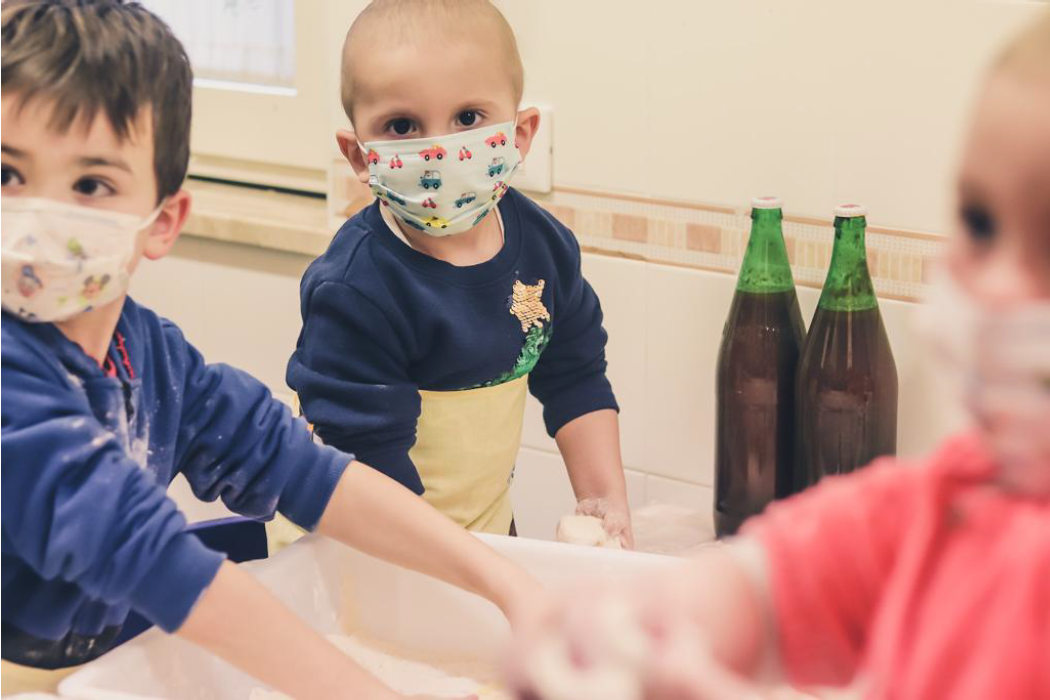
The building will be divided on three levels for a total of about 890 square meters and in particular the ground floor will host a set of common areas intended for Welcoming, Socialization and Conviviality activities.
Netgroup chose to contribute to the realization of the Home Project not only through a donation aimed at supporting the building of the facility, but also by outfitting one of the common areas with innovative technologies related to the world of ICT, particularly the application of virtual, augmented and mixed reality.
Virtual Human for Solidarity – VHS will be a workshop dedicated to immersive experiences to offer young patients and their families a tangible benefit with respect to the difficulties they face daily.
The benefits of virtual reality for pediatric patients
In fact, many studies attest that the use of virtual reality can have a beneficial effect on patients engaged in chemotherapy cycles, as it would reduce stress levels by allowing patients to immerse themselves in a kind of ‘escape route’ from reality-a true distraction therapy. Relaxing images, immersive and edutainment activities may provide a kind of alternative to the administration of painkillers as patients become calmer and feel less pain.
In addition, in view of the two main diseases of the facility’s potential patients, namely spinal muscular atrophy and Duchenne muscular dystrophy, special virtual reality scenarios could be used to conduct motor rehearsals before and after treatment administration.
Further potential can also be found in relation to cognitive-behavioral therapies, psychiatric evaluations, and rehabilitation. Consider, for example, young patients who, being unable to move for health reasons, cannot physically reach the specialist’s office; in this case, the use of the virtual setting makes it possible to overcome this physical barrier and ensure real-time interaction with their doctor.
The VHS Zone
The project will set up a VHS-ZONE featuring devices (viewers, tablets and interactive screens) for the use of virtual, augmented and mixed reality applications.
The entire area will be designed to ensure the best possible patient experience, particularly through the use of:
– lightweight VR viewers, so as not to fatigue users who are already tired from sustained therapies:
-Haptic interfaces to allow, where necessary, interaction with VR even without a controller (device-free: prioritizing the use of the body).
